


1. Introduction: Why Lab Requests Break Down as Teams Scale
In the earliest stage of a biotech company, collaboration feels natural. A scientist walks over to another team, sends a quick Slack message, or fires off a short email asking for help with a sample or analysis. Because everyone sits close together and works on a limited number of projects, nothing slips through the cracks.
But as organizations grow, this informal system quietly becomes one of the biggest operational risks in the lab.
Requests multiply. Teams are distributed across floors, buildings, or even continents. Customers, partners, and internal groups all submit work in different formats—emails, attachments, shared forms, spreadsheets, or chat threads. Suddenly, no one can answer basic questions: What is currently in progress? Who owns this task? How long has it been waiting?
What used to feel collaborative now feels chaotic. Productivity stalls not because science is difficult, but because coordination is broken.
2. From Inboxes to Intelligent Intake
When labs rely on email or generic forms, requests immediately lose structure. Critical information may be missing, attachments go unnoticed, and no single system holds the full history of the work.
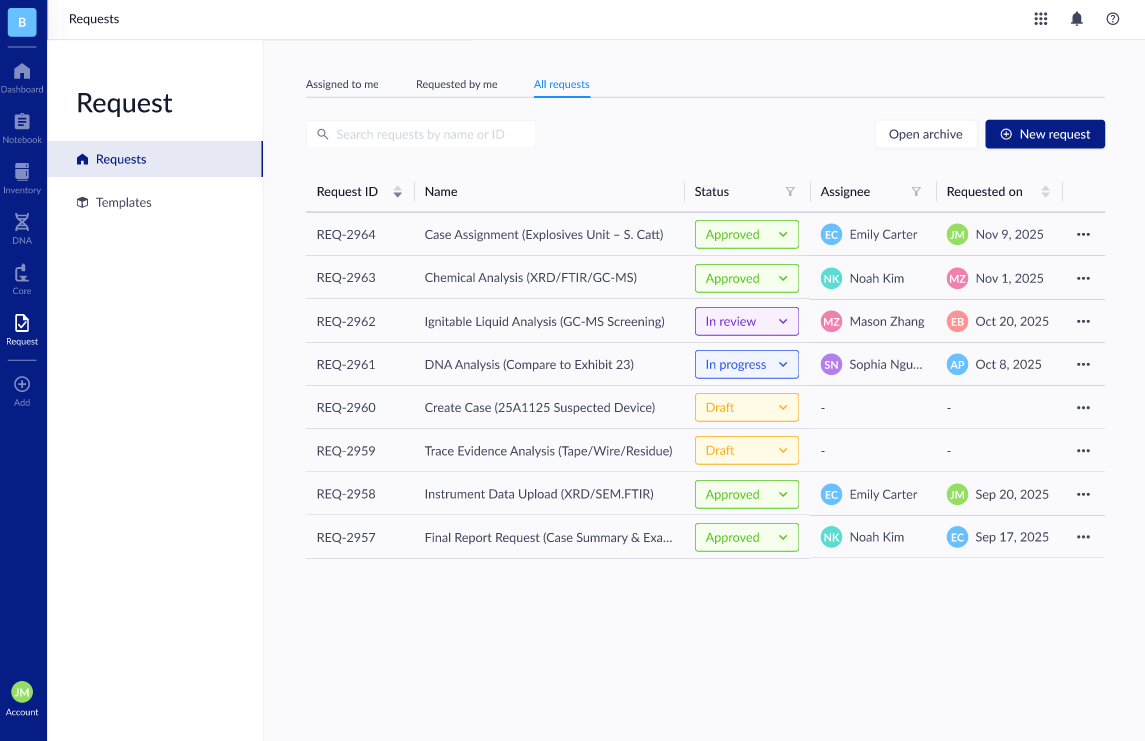
A modern LIMS transforms this experience by turning every incoming task into a structured, traceable request. Instead of chasing messages across platforms, all submissions live inside one centralized intake flow.
Each request captures the essential scientific context—what service is needed, which samples are involved, what timeline is expected—and becomes part of a transparent queue that every team can access. This eliminates ambiguity and gives operations leaders a real-time picture of demand across the lab.
3. Making Repetitive Work Effortless
In many labs, the same workflows repeat every day. The same customer submits similar service needs. The same analysis is run on comparable samples. Yet scientists still retype the same fields, upload the same templates, and recreate the same metadata.
Over time, this repetition becomes exhausting and error-prone.
An intelligent request workflow allows teams to reuse previous submissions as a starting point—preserving important fields while allowing small adjustments. This simple change saves hours each week, reduces mistakes, and ensures consistency across recurring work.
For high-throughput labs, this feature alone can transform productivity.
4. Built-In Review and Approval Workflows
Not every request should be accepted automatically.
Laboratory managers must balance capacity, project priority, and quality control. Without visibility, these decisions happen reactively—often too late.
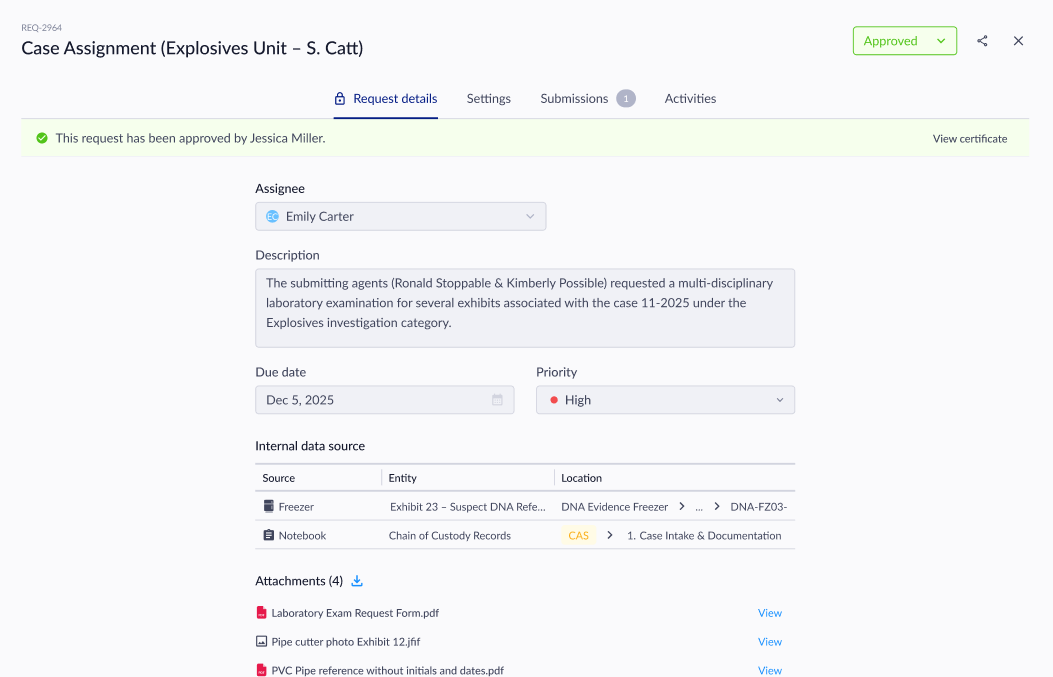
When review steps are built directly into the request lifecycle, managers gain the context they need to act decisively. They see the request details, linked samples, workload distribution, and historical patterns before making a decision.
This structured review process prevents overload, protects scientific quality, and ensures that the right work enters the system at the right time.
5. Assigning the Right Work to the Right Team
One of the most common sources of frustration in growing labs is unclear ownership.
Emails get forwarded. Slack messages are missed. Two people unknowingly start the same task while another request sits untouched.
With a dedicated request workflow, assignment becomes explicit. Each task is routed to the appropriate individual or team with all relevant context attached—samples, protocols, deadlines, and dependencies.
This clarity eliminates confusion, strengthens accountability, and ensures that work moves forward without unnecessary handoffs.
6. Closing the Loop: Visibility from Submission to Completion
In traditional workflows, requesters often feel left in the dark. They send a message and hope for the best.
A structured LIMS workflow tracks every step—from initial submission to final completion. Status updates are visible to all stakeholders, creating transparency without manual follow-ups.
This shared visibility builds trust across teams and external partners, reducing friction and strengthening relationships.
7. Scaling Collaboration Without Adding Complexity
As biotech organizations scale, the volume of coordination increases exponentially. Without the right infrastructure, collaboration becomes the bottleneck to innovation.
Request management is not about adding bureaucracy—it is about removing friction. By replacing fragmented communication with structured, traceable workflows, labs can grow without sacrificing clarity or speed.
8. How Genemod Connects Requests to the Scientific Workflow
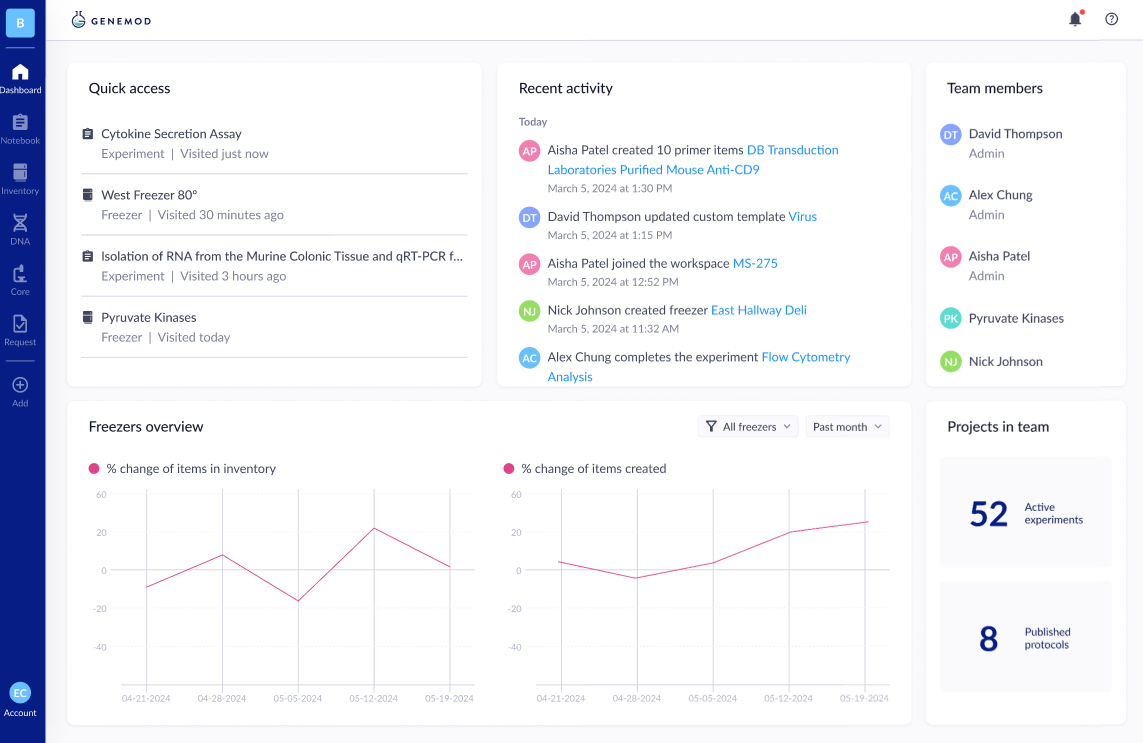
Genemod’s Request Management feature is designed to be a natural extension of the scientific process. Every submission is linked directly to experiments, samples, and results—ensuring that work is never detached from its context.
By unifying intake, review, assignment, and closure inside a single platform, Genemod turns cross-team collaboration into a repeatable, scalable system.
In modern biotech, the ability to manage requests is the ability to move science forward—together.


